Fernando Pessoa — Biography
Who was Fernando Pessoa?
In the city of Lisbon there is a writer whose name runs through streets and neighbourhoods. Many people know his verses by heart. He is read and translated all over the world.
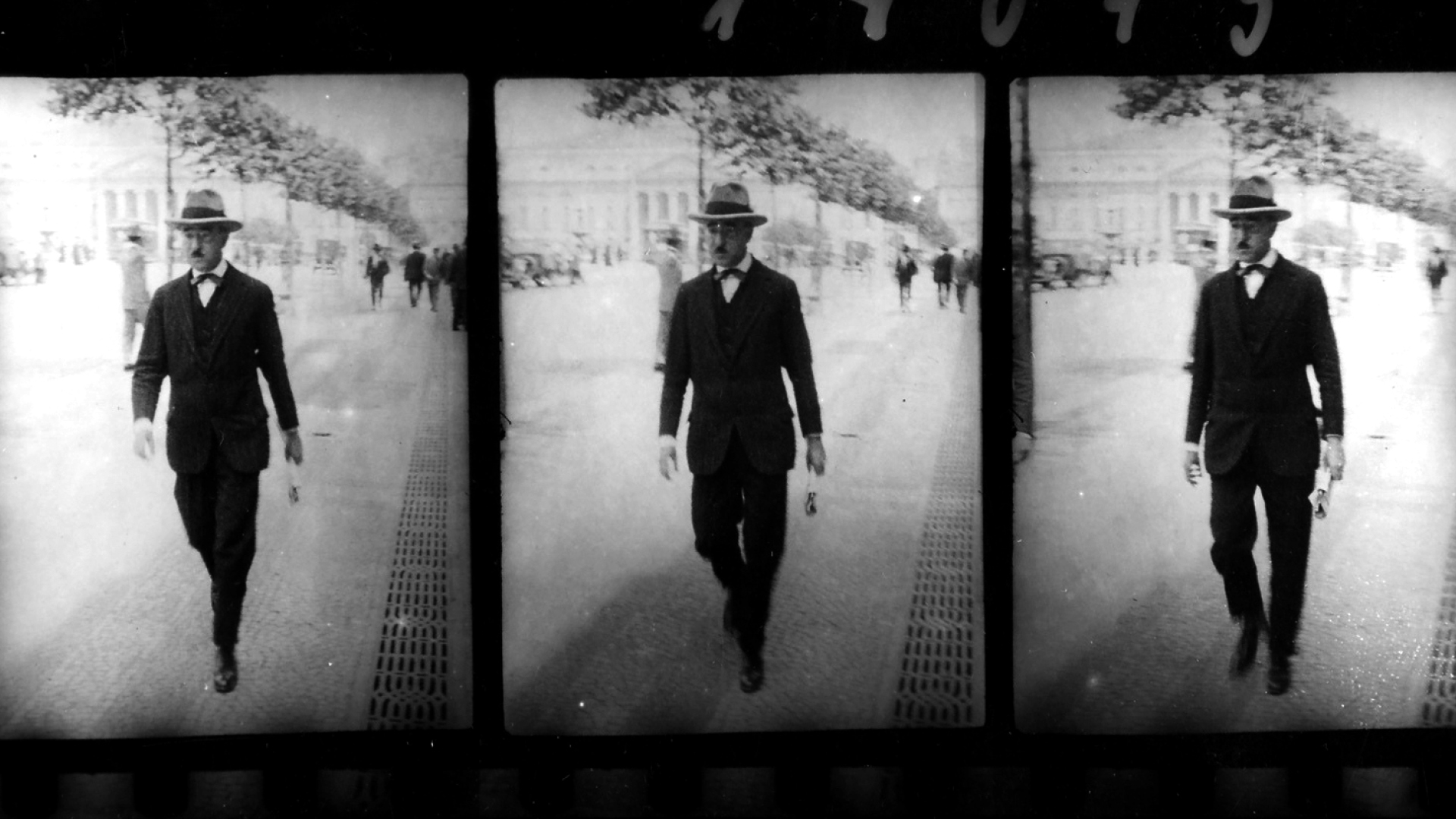
This man is Fernando Pessoa. He did not live to be 50, but he lived many different lives.
He moved house often, worked as a translator in different offices, and discussed art, literature and politics in the cafés of the capital in the first decades of the twentieth century.
Start at the beginning→1888—1895Childhood
Fernando António Nogueira Pessoa was born on 13 June 1888, in Largo de São Carlos, Lisbon. He was the first child of Maria Madalena Pinheiro Nogueira and Joaquim de Seabra Pessôa.
Madalena Nogueira was born in Angra do Heroísmo (Terceira Island, the Azores) in 1861. At the age of three, she came to the mainland. She was a highly cultured woman: she had a good command of English and French, read widely and wrote poetry. Joaquim de Seabra Pessôa was born in Lisbon in 1850. He worked at the Ministry of Justice and, in the evenings, at the Diário de Notícias, as a music critic.
At the beginning of 1893, Jorge, Fernando’s brother, was born. In the summer, however, Joaquim Pessôa died of tuberculosis, shortly after Fernando turned five. The family had to move to a smaller house, in Rua de São Marçal: Maria Madalena, Fernando, Jorge, as well as the paternal grandmother, Dionísia Seabra Pessoa, who lived with them, and two maids.
The family’s difficulties deepened: grandmother Dionísia suffered from mental illness, with regular crises, and in 1894 baby Jorge died of an allergic reaction, before his first birthday.
That same year, however, fortune surprised Madalena Nogueira: while still in mourning, she met João Miguel Rosa, her future husband. João Miguel Rosa was consul in Durban, in present-day South Africa. Her new relationship would lead to her leaving Portugal. It was at this moment, as the family’s future was being decided, that Pessoa, aged 7, wrote his first verses, foreseeing the changes to come.
«À minha querida mamã»
Ó terras de Portugal
Fernando Pessoa's first quatrain, written at age 7
Ó terras onde eu nasci
Por muito que goste delas
Inda gosto mais de ti.
In December 1895, his mother married Commander João Miguel Rosa by proxy; the groom was represented by his brother, Henrique Rosa. In January 1896, Pessoa and his mother left Lisbon for Durban. The voyage took 30 days. Pessoa was 7 years old.
1896—1905The Durban years
In Durban, at the age of 7, Pessoa entered the Convent School. English became the language of his education.
The family grew: five half-siblings of Fernando Pessoa were born, two of whom died in childhood. The survivors were Henriqueta Madalena (1896-1992), with whom Pessoa would have a very close relationship, Luís Miguel (1900-1975) and João Maria (1903-1977).
At 11, Pessoa enrolled at Durban High School, where he stood out as an excellent student. At 14, he published his first poem, «Quando a dor me amargurar», in the newspaper O Imparcial.
At 15, in 1903, he won the Queen Victoria Memorial Prize for the best essay in English, among 899 candidates. The books he received with this prize are among the oldest in his private library. A few months earlier, he had published his first poem in English, «The Miner’s Song», in the newspaper The Natal Mercury, signing with a fictitious name, Karl P. Effield.
A year later, in the same newspaper, he would publish a poem signed by C. R. Anon, a poet and prose writer in English — a fictional author who would go on to produce an extensive body of work.
After finishing school, in 1905, Pessoa boarded the steamer Herzog, alone, bound for Lisbon. He would never return to South Africa.
1905—1913Starting life in Lisbon
Pessoa returned to Lisbon to attend the Curso Superior de Letras, the arts course of the University of Lisbon, which he abandoned about a year later.
In 1906, Dionísia de Seabra Pessoa, his paternal grandmother, died. Pessoa was her sole heir. In 1909, after coming of age at 21, he received his grandmother’s inheritance, which he invested entirely in buying machinery to set up a printing house: Empresa Íbis — Tipográfica e Editora. The business lasted little more than 6 months.
He had many addresses and many occupations. From this time until the end of his life, he worked as a foreign correspondent and translator in numerous offices. He was what we would now call a freelancer.
It was in these years that Pessoa attributed his first poems, originally written in English, to the name Alexander Search, and created Jean Seul de Méluret, an author of texts in French.
This period also saw the publication, in the magazine A Águia, of his first article of literary criticism (1912) and of the text «Na Floresta do Alheamento» (1913), identified as «From the Livro do Desassossego (Book of Disquiet), in preparation».
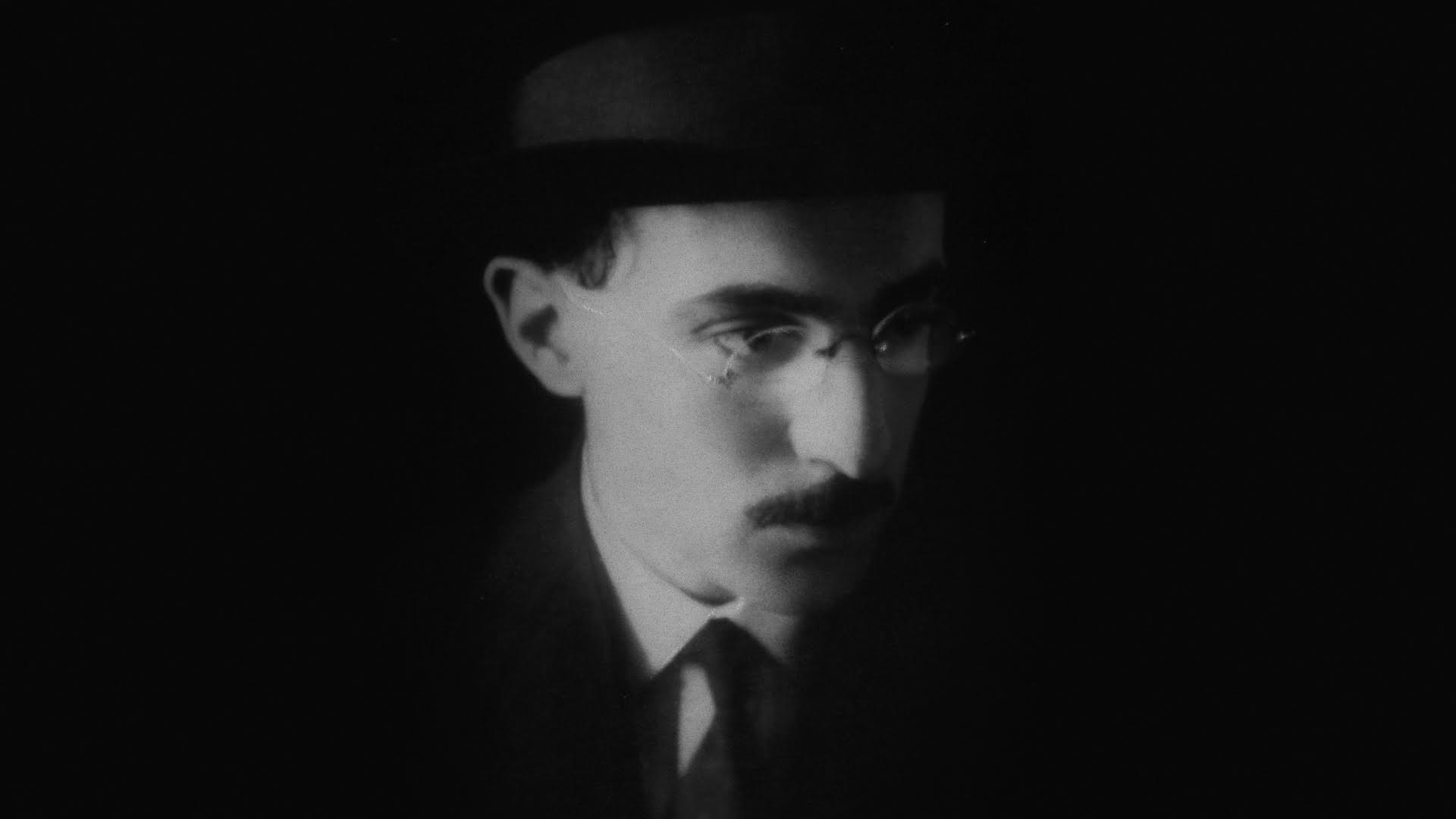
«Tenho em mim todos
os sonhos do mundo.» Álvaro de Campos
1914—1918The explosion of writing
Pessoa would mark 1914 as the year of the creation of the heteronyms.
In a letter written in 1935 to his friend Adolfo Casais Monteiro, editor of the magazine Presença, Pessoa described his supposed Triumphal Day — 8 March 1914. On that day he claimed to have written, standing at a tall chest of drawers, in ecstasy, «thirty-odd poems at a stretch», thus seeing the three great poets «appear»: Alberto Caeiro, Álvaro de Campos and Ricardo Reis.
The study of the papers in his estate proves that the poems Pessoa mentions in that letter were not, in fact, all written on that day. Yet the fiction of the Triumphal Day undoubtedly retains great relevance, as the theory Pessoa wanted to leave fixed about the genesis of his heteronyms. Even without a real Triumphal Day, the period around 1914 was a very fruitful phase in Pessoa’s written production.
He published numerous texts in literary magazines and cemented friendships with writers and artists of the Lisbon milieu, such as Mário de Sá-Carneiro and Almada Negreiros.
In 1915 the magazine Orpheu was launched, causing immediate scandal and founding Modernism in Portugal. The Lisbon of the time was shocked by the formal and stylistic innovation of the texts published in it and of the artworks it included. Fernando Pessoa and Mário de Sá-Carneiro, though not the magazine’s editors, led the group that created it. It was in Orpheu that Pessoa published the first poems of Álvaro de Campos.
In 1918, Pessoa published his first books: Antinous and 35 Sonnets — slim volumes of poems in English, published at his own expense.
1919—1925Affections, family and projects
In 1919, Pessoa met Ofélia Queiroz at the firm Félix, Valladas & Freitas, Lda., where they both worked. Pessoa was a translator of commercial letters, Ofélia a secretary. He was 31, she was 19.
Their courtship produced an abundant exchange of letters, in which the couple address each other by diminutives and other terms of endearment. It was the only romantic relationship of Pessoa’s we know of, and it had two phases: during 1920 and, later, after a reconciliation, between 1929 and the beginning of 1931.
Through the correspondence, we learn that Ofélia was a woman who, in the 1920s, strove to keep up with the thinking and behaviour of a man whose attitude did not correspond to a conventional courtship. Ofélia Queiroz worked outside the home, exchanged letters with the heteronym Álvaro de Campos, and was willing to adapt her vision of married life to Pessoa’s conditions. The courtship, however, ended without marriage.
«I do not take you for an ordinary man, and so I do not expect banalities or futilities from you.»Ofélia Queiroz, letter of 30 September 1929
In 1920, Pessoa needed to find a flat to take in his mother, recently widowed, and his half-siblings. Pessoa’s stepfather, João Miguel Rosa, had died at the end of 1919, and the rest of the family was about to leave South Africa. So, after living in more than a dozen rooms and flats in Lisbon, Pessoa found a convenient flat in Campo de Ourique, at Rua Coelho da Rocha, no. 16 — where Casa Fernando Pessoa stands today. Pessoa, his mother, Madalena Nogueira, and his half-sister, Henriqueta Madalena, moved to this address. His half-brothers Luís and João went to England, where they would live for the rest of their lives.
In the same year, 1920, Pessoa founded the publishing house Olisipo with two partners. The intention was to publish Spanish and Portuguese texts abroad, translated into English, and to publish classics of world literature in Portugal. The translations would be made by Pessoa, signed with different names.
Olisipo’s first book was A Invenção do Dia Claro, by Almada Negreiros. Through this publishing house Pessoa also published his own English Poems I-II and English Poems III, Canções, by António Botto, and Sodoma Divinizada, a pamphlet by Raul Leal. The last two titles, for their homoerotic content, provoked protests and were seized and burned, together with Decadência, by Judith Teixeira, considered equally immoral. The controversy became known as the «Literature of Sodom» affair and contributed to the end of Olisipo in 1923.
Pessoa launched a new project in 1924: Athena, an art magazine, which he edited together with Rui Vaz, of whom very little is known today. Five issues came out between October 1924 and June 1925. Athena has the great significance of being the vehicle for the publication and dissemination of the poetry of Ricardo Reis and Alberto Caeiro, until then entirely unpublished. In 1924, 20 odes by Ricardo Reis were published. In 1925, Pessoa published poems from O Guardador de Rebanhos and from the Poemas Inconjuntos of Alberto Caeiro.
1925 was also a year of significant deaths for Pessoa: in February died Henrique Rosa, his stepfather’s brother, with whom Pessoa had a close friendship and who influenced him politically and in literature; in March died Madalena Nogueira, Pessoa’s mother.
Pessoa in photographs
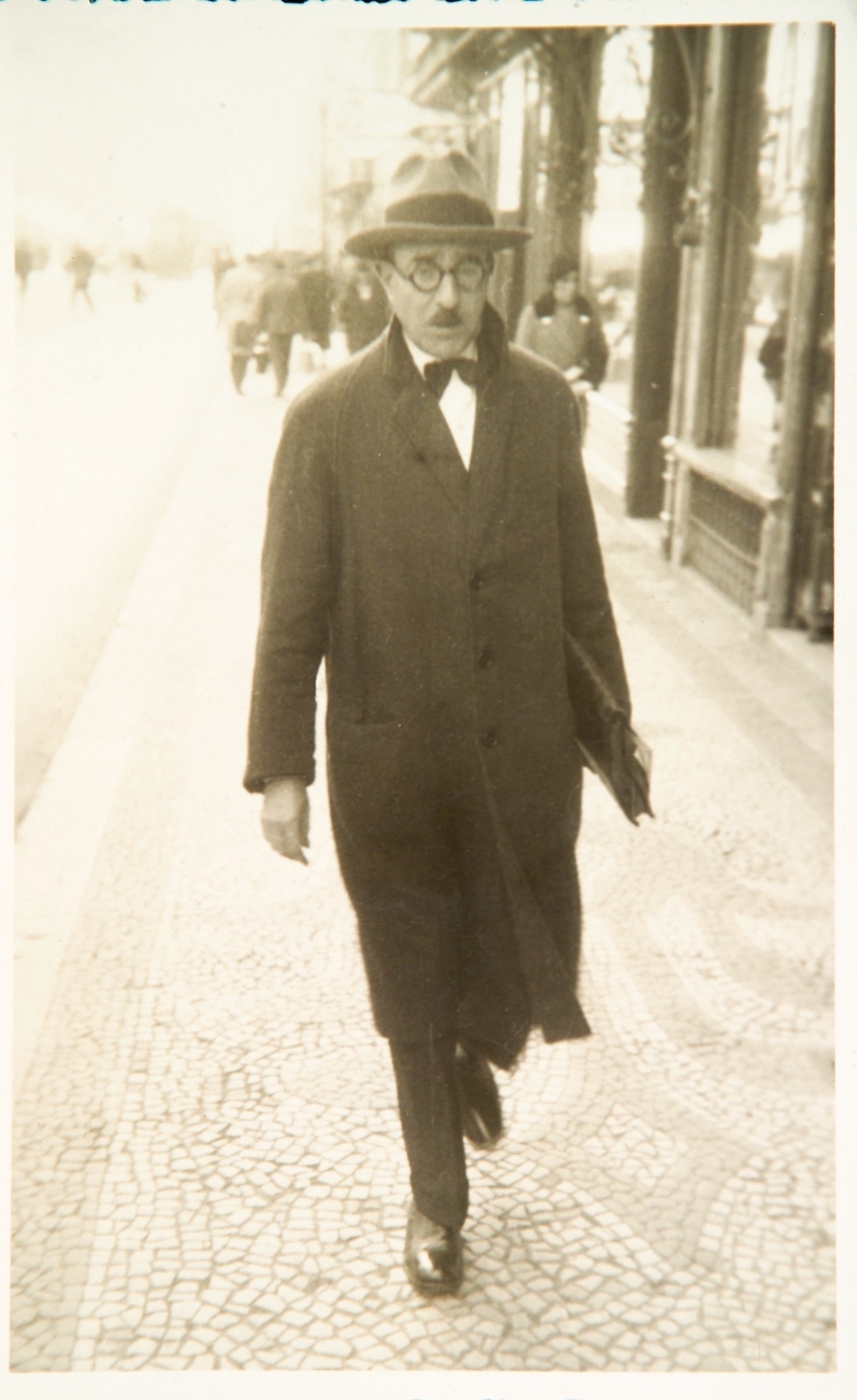
Archive
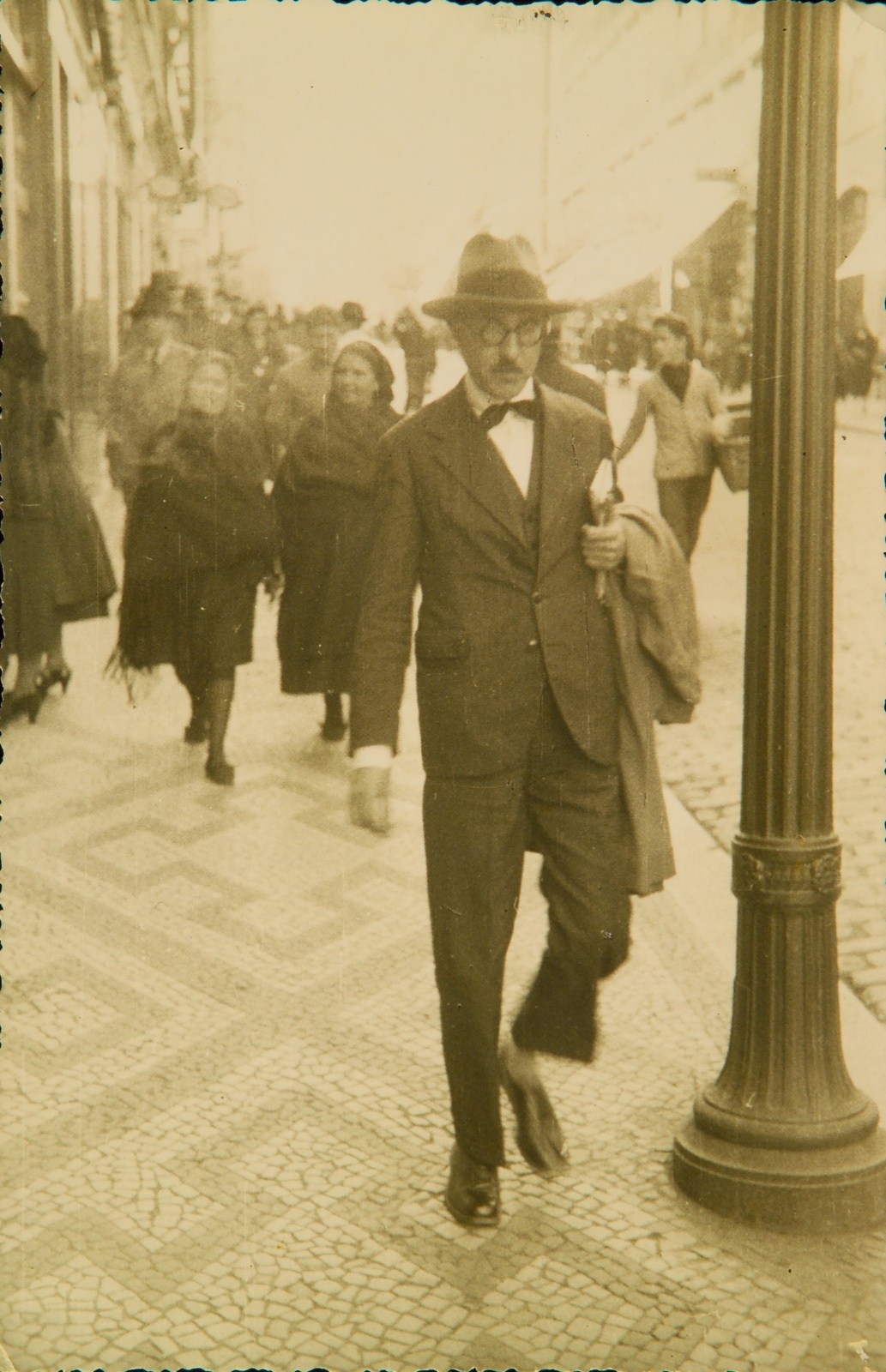
In one of the streets of the Baixa
Lisbon, n.d.
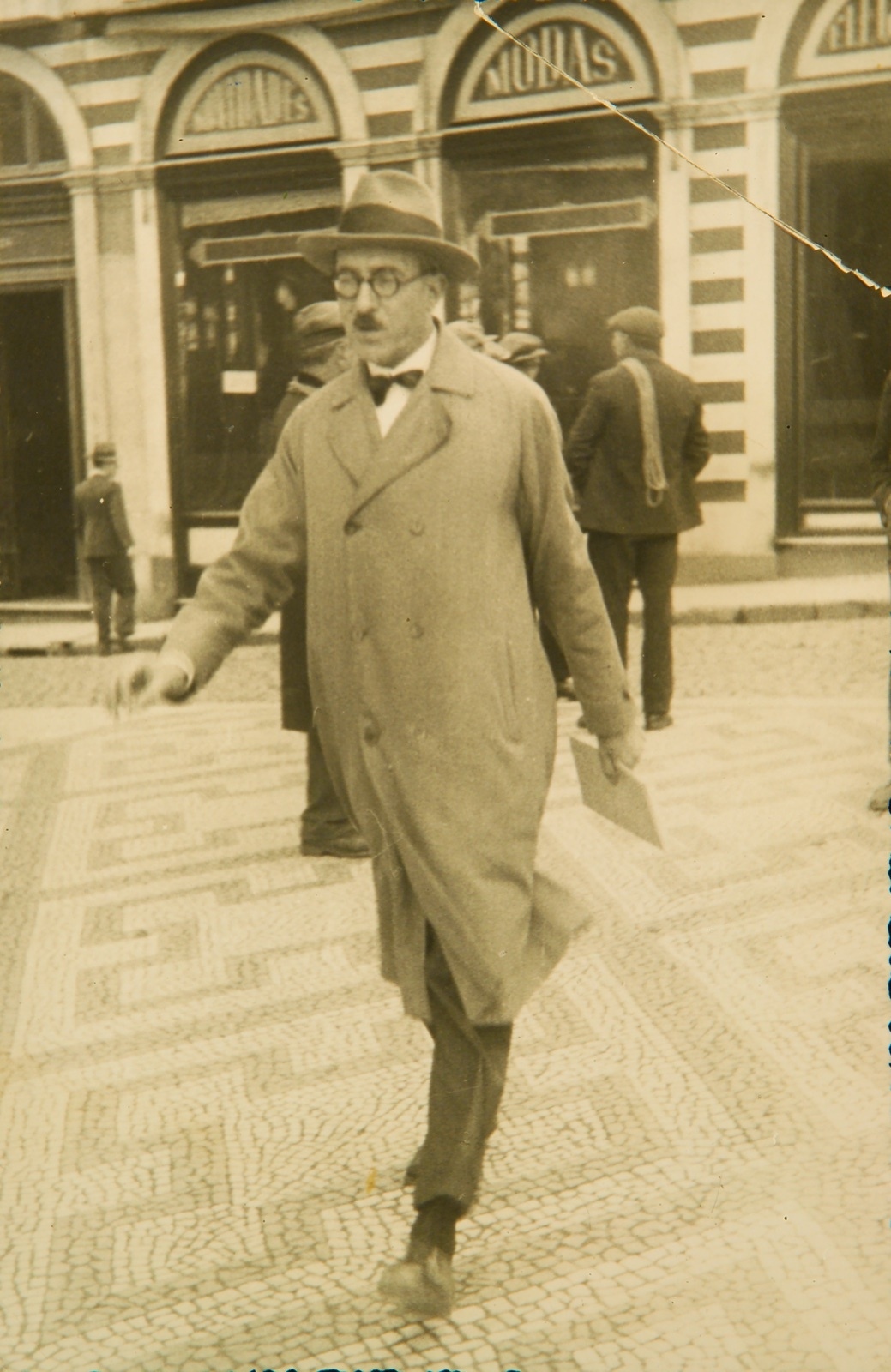
Archive
In the Baixa
Lisbon, n.d.
Archive
In a street of the Baixa
Lisbon, n.d.
Archive
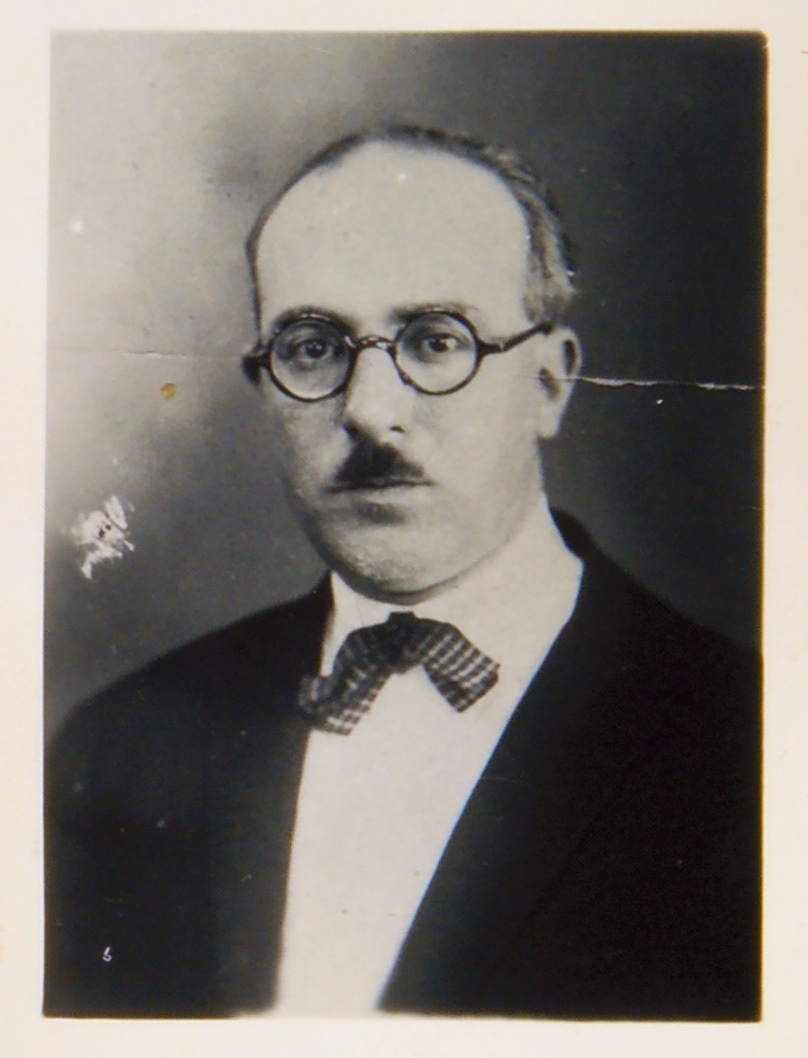
Portrait
1928
Archive
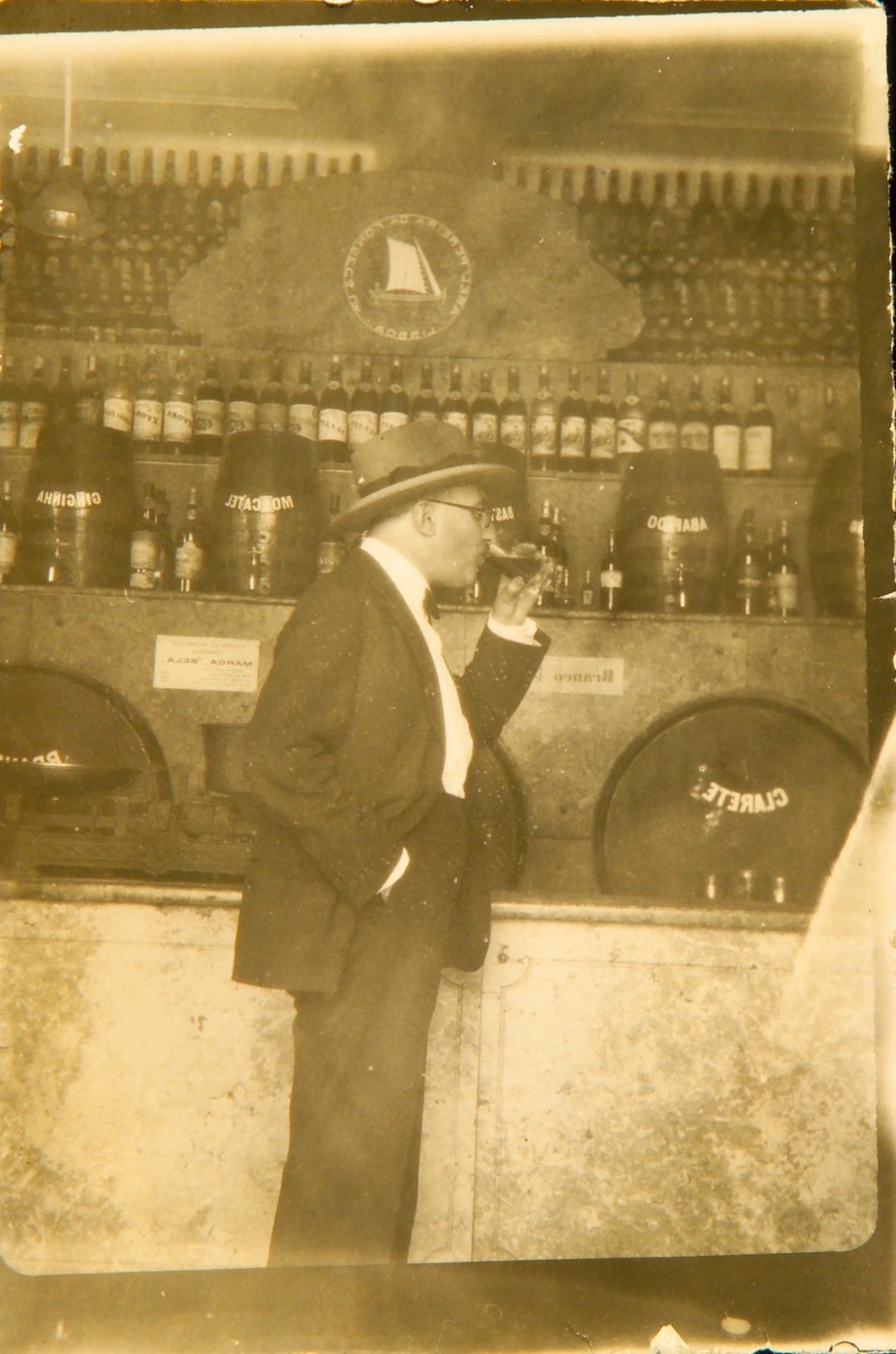
At Abel Pereira da Fonseca
1929