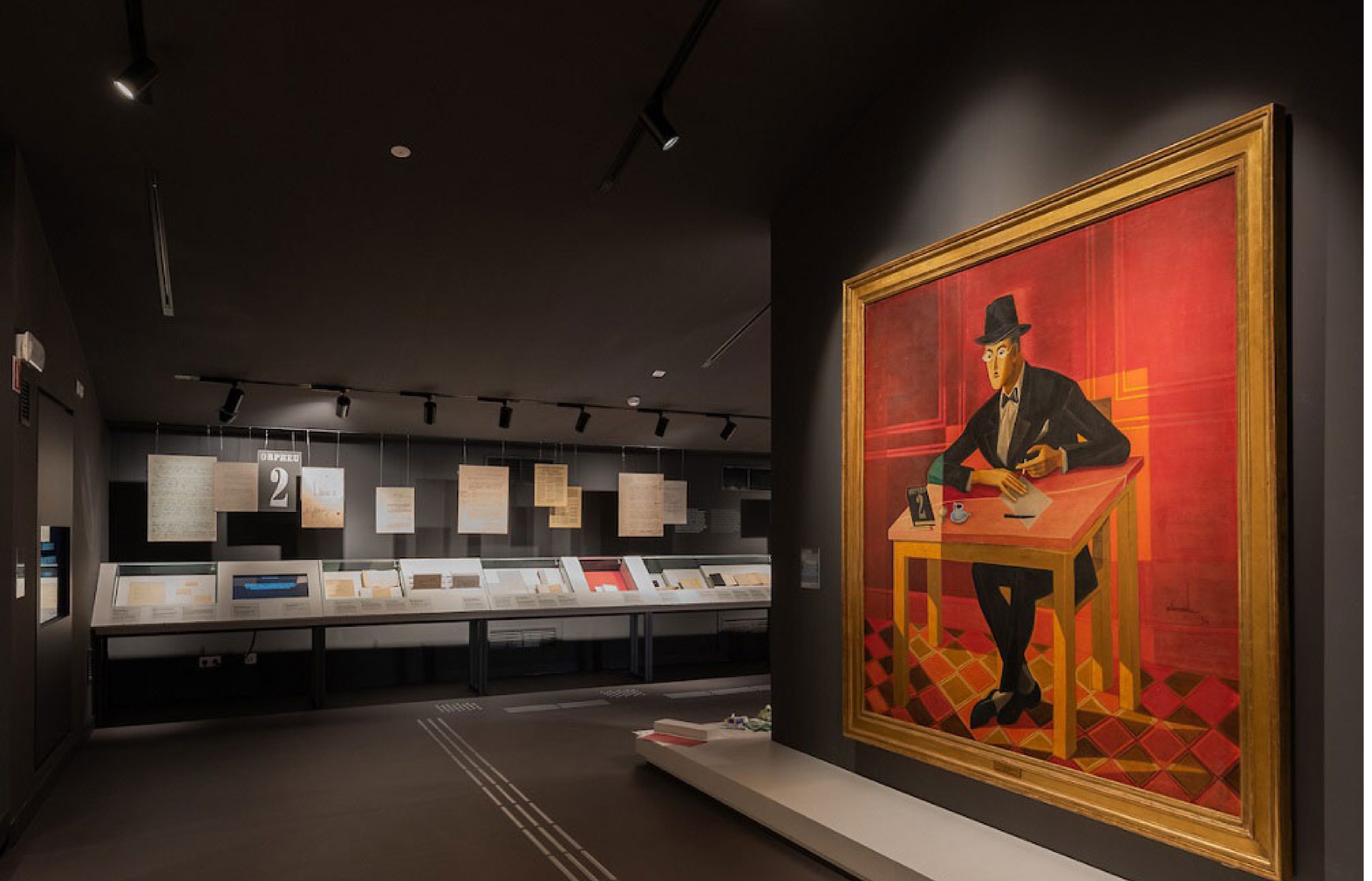
Museum — The House
The house where literature lives.
On the first floor, right-hand side, of number 16 Rua Coelho da Rocha, Fernando Pessoa lived his last fifteen years. Today the whole building is his — and belongs to everyone who reads him.
About us
The mission of Casa Fernando Pessoa is to share and generate knowledge about the life and work of Fernando Pessoa, and to promote reflection and debate on the power of literature and the transformative effects of reading.
At Casa Fernando Pessoa we conserve, preserve and promote the legacy of Fernando Pessoa, whose documentary estate was classified as a National Treasure.
Home to two libraries — a public library, specialising in Fernando Pessoa and world poetry, and the Private Library of Fernando Pessoa — the Casa also houses and showcases objects, furniture and documents of the writer, as well as a collection of works of art, composed of creations by artists of different generations and movements.
The books that belonged to Fernando Pessoa are the largest collection we keep and share. They allow us to enter the writer’s creative universe, revealing him as a reader too.
Keeping up with the research and new knowledge about the work of Fernando Pessoa, we collaborate regularly with researchers.
Casa Fernando Pessoa is a house open to the community and to collaboration with partners. We work with all levels of education — from preschool to higher education — and we try to bring literature and poetry closer to every audience, from our neighbourhood to the other side of the world.
Inside or outside our doors, from the city where the writer was born, we strive to awaken curiosity and invite everyone to discover Fernando Pessoa, poetry, literature — and their creative effects.
Directors: Manuela Júdice (1993–2002), Clara Ferreira Alves (2002–2006), Francisco José Viegas (2006–2008), Inês Pedrosa (2008–2014) and Clara Riso (2014–present).
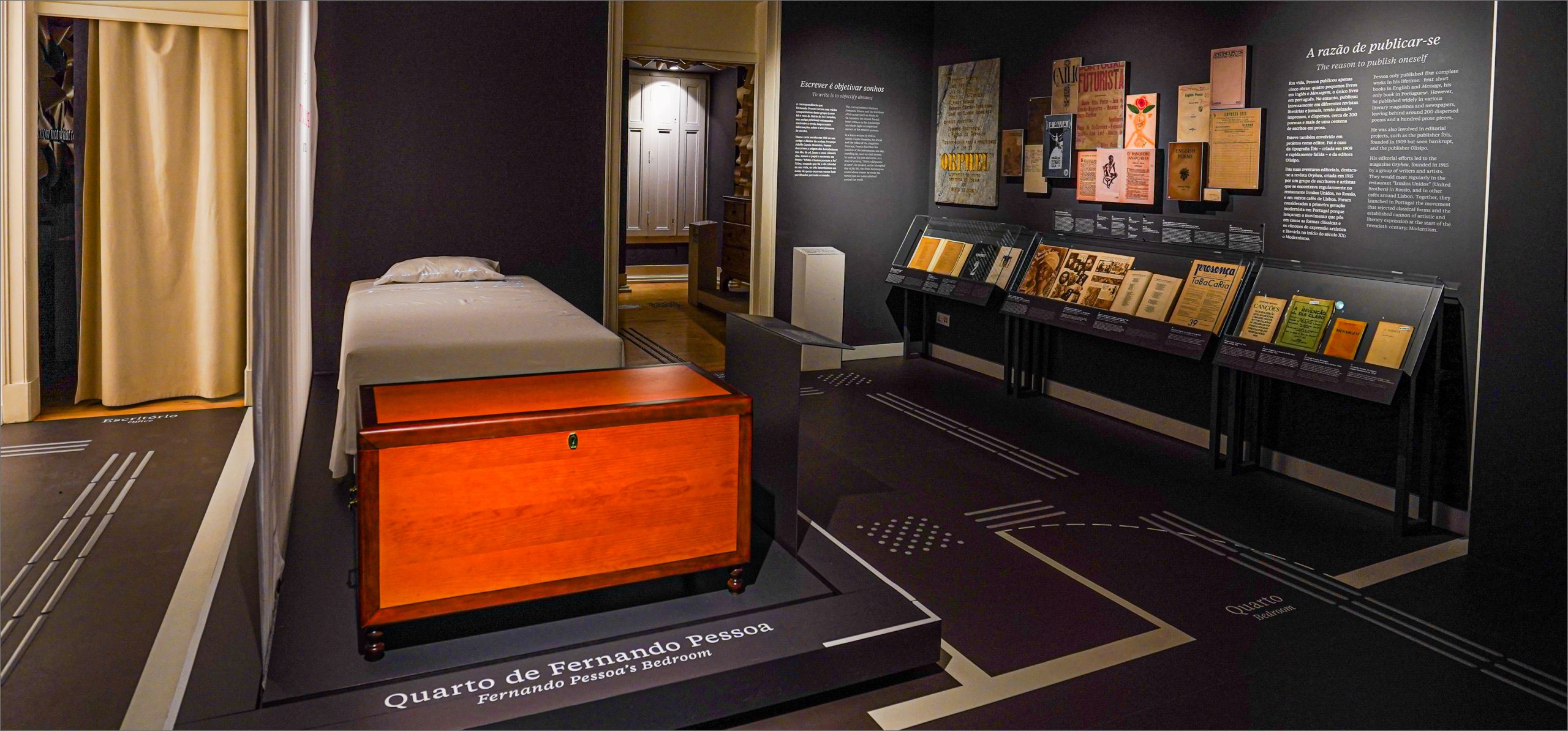
Building
A hundred years of history between a poet's home
and a museum of literature.
-
1920
The poet moves in
Fernando Pessoa comes to live on the first floor, right-hand side, of number 16 Rua Coelho da Rocha. He lived here for fifteen years, until 1935, the year of his death.
-
1988
The city buys the estate
At the end of 1988, the Lisbon City Council acquires Pessoa’s estate from his family: personal objects and documents, some furniture and a large part of the writer’s Private Library.
-
1990
The city buys the house
In December, the Lisbon City Council acquires the building, then in poor condition and at risk of demolition, to house and exhibit the poet’s estate.
-
1993
Casa Fernando Pessoa is born
Rebuilt according to a project by architect Daniela Ermano, the building is inaugurated on 30 November — the anniversary of the poet’s death in 1935. It has been open to the public ever since, with exhibition rooms, a library specialising in Fernando Pessoa and poetry, and an auditorium.
-
2012
New management
Casa Fernando Pessoa comes under the management of EGEAC — Empresa de Gestão de Equipamentos e Animação Cultural, that runs most of Lisbon’s cultural venues.
-
2020
The great renovation
The building is renovated to an architectural design by José Adrião Arquitectos, with the support of Turismo de Portugal’s Accessible Tourism Support Line. The works made the building more accessible and sustainable, improved circulation and expanded the exhibition area.
The Casa reopened with a new long-term exhibition about Pessoa, a more structured library and a better-equipped auditorium. The renovation received an Honourable Mention in the 2020 Valmor Prize.
-
2021
Best Portuguese Museum
Casa Fernando Pessoa receives the Best Portuguese Museum award from APOM — the Portuguese Association of Museology.
-
2022
Museum of Literature
Casa Fernando Pessoa is formally established as a Museum of Literature (Resolution No. 887/CM/2022).
Technical sheet of the renovation (2020)
- Architecture
- José Adrião Arquitectos
- Museography
- Nuno Quá and Cláudio Silva
- Curatorship
- Paulo Pires do Vale
- Museology
- Ana Carvalho
- Accessibility
- Acesso Cultura
- Support
- Accessible Tourism Support Line — Turismo de Portugal