Fernando Pessoa — Chronology
One life, many lives.
From 1887 to 2019: the events, the publications and the heteronyms of Fernando Pessoa.
The highlighted events belong to the biographies Pessoa invented for his heteronyms.
1887—1895Childhood
-
1887
- 5 September
Fernando Pessoa’s parents marry, in Lisbon. His father, Joaquim de Seabra Pessoa, was born in Lisbon in 1850. He worked at the Ministry of Justice and, in the evenings, was a music critic at the Diário de Notícias. His mother, Maria Madalena Pinheiro Nogueira, was born in 1861 in Angra do Heroísmo (the Azores). She came to live on the mainland at the age of 4, after her father was appointed Secretary-General of the Civil Government of Porto. Raised in Porto and Lisbon, she would never live in the Azores again.
- ✳︎ 19 September
Ricardo Reis is born at 4.05 p.m., in Porto.
- 5 September
-
1888
- 13 June
Fernando António Nogueira Pessoa is born at 3.20 p.m., in a private house opposite the Teatro Nacional de S. Carlos, no. 4, 4th floor left.
- ✳︎
Alexander Search is born on the same day, in Lisbon.
- 13 June
-
1889
- ✳︎ 16 April
Alberto Caeiro is born at 1.45 p.m., in Lisbon.
- ✳︎ 16 April
-
1890
- ✳︎ 15 October
Álvaro de Campos is born at 1.30 p.m., in Tavira.
- ✳︎ 15 October
-
1893
- 21 January
Jorge, Pessoa’s brother, is born.
- 13 July
Pessoa’s father dies of tuberculosis.
- 21 January
-
1894
- 2 January
His brother Jorge dies of an allergic reaction to the smallpox vaccine.
- January
His mother meets João Miguel Rosa, her future husband. Pessoa would later become friends with Henrique Rosa, his stepfather’s brother, who would exert a great political and literary influence on him.
- 2 January
-
1895
- 26 July
At the age of 7, he composes his first verses, a quatrain entitled «À minha querida mamã».
- 30 December
His mother marries, by proxy, Commander João Miguel Rosa, who is in Durban as consul of Portugal. The groom is represented by his brother, Henrique Rosa. Five children will be born of this marriage; two die in childhood.
- 26 July
1896—1905The Durban years
-
1896
- 20 January
Pessoa and his mother leave Lisbon for Madeira, where, on the 31st, they board the Hawarden Castle for Durban, in present-day South Africa. The voyage takes 30 days.
- March
Pessoa enters the Convent School, a school run by Irish and French nuns, where, being very gifted, he will complete the equivalent of five school years in three.
- 20 January
-
1899
- 7 April
Pessoa enters Durban High School.
- 7 April
-
1901
- June
He obtains the First Class School Higher Certificate of the University of the Cape of Good Hope.
- 1 August
He travels with his family, on holiday, to Lisbon, on a steamer that calls at Lourenço Marques (present-day Maputo), Zanzibar, Dar es Salaam, Port Said and Naples.
- June
-
1902
- 26 June
At the end of the holidays, his mother and stepfather sail back to Durban with the children, but Pessoa remains in Lisbon, with his maternal great-aunts.
- 18 July
His first published poem, «Quando a dor me amargurar», appears in the newspaper O Imparcial.
- 19 September
He sails alone for Durban, on the Herzog.
- October
He enters the Commercial School in Durban.
- 26 June
-
1903
- 11 July
Pessoa publishes his first English poem, «The Miner’s Song», in the newspaper The Natal Mercury, signing as Karl P. Effield, supposedly from Boston.
- November
He sits the qualifying examination of the University of the Cape of Good Hope. He wins the Queen Victoria Memorial Prize for the best essay, among 899 candidates, even though English was not his mother tongue.
- 11 July
-
1904
- 9 July
He publishes, in The Natal Mercury, a poem signed by C. R. Anon, a poet and prose writer in English — the first fictional author to produce an extensive body of work.
- 16 December
He sits the Intermediate Examination in Arts of the University of the Cape of Good Hope, being placed in the Second Class and obtaining the highest mark in the province of Natal (the KwaZulu-Natal province of present-day South Africa).
- 9 July
-
1905
- 20 August
He boards the Herzog bound for Lisbon. He will never return to South Africa. He is known not to have liked travelling.
- 2 October
He begins attending the Curso Superior de Letras in Lisbon.
- 20 August
1906—1913Starting life in Lisbon
-
1906
- ✳︎
The first poems are attributed to Alexander Search.
- ✳︎
-
1907
- June
Pessoa abandons the Curso Superior de Letras, probably for lack of motivation.
- 6 September
Dionísia de Seabra Pessoa, his paternal grandmother, dies. Pessoa, her sole heir, will receive the inheritance on coming of age (1909).
- June
-
1908
- ✳︎
Jean Seul, an author of texts in French, appears.
- 14 December
First dated fragment of Fausto, a drama in verse inspired by the work of the German poet Goethe, which will remain unfinished.
- ✳︎
-
1909
- August
He goes to Portalegre to buy machinery to open Empresa Íbis — Tipográfica e Editora, which starts operating in November. He makes the purchase with the money inherited from his grandmother Dionísia.
- August
-
1910
- June
Empresa Íbis closes for lack of clients.
- June
-
1912
- April
He publishes his first critical article, «A Nova Poesia Portuguesa Sociologicamente Considerada», in the literary magazine A Águia (Porto).
- April
-
1913
- August
He publishes in the magazine A Águia «Na Floresta do Alheamento», a text identified as «From the Livro do Desassossego (Book of Disquiet), in preparation».
- August
1914—1918The explosion of writing
-
1914
- February
He publishes in the literary magazine A Renascença (Lisbon), which had this single issue, his first adult poems, «Ó sino da minha aldeia» and «Pauis de roçarem ânsias pela minh’alma em ouro», under the general title «Impressões do Crepúsculo».
- ✳︎ December
Raphael Baldaya, astrologer and student of occultism, appears.
- February
-
1915
- ✳︎
António Mora appears, conceived as a «philosophical continuator» of Alberto Caeiro.
- ✳︎
Alberto Caeiro dies.
- 24 March
Orpheu 1 comes out, including O Marinheiro, subtitled «static drama», and, by Álvaro de Campos, «Opiário» and «Ode Triunfal».
- Late June
Orpheu 2 comes out, including «Chuva Oblíqua» and Álvaro de Campos’s «Ode Marítima».
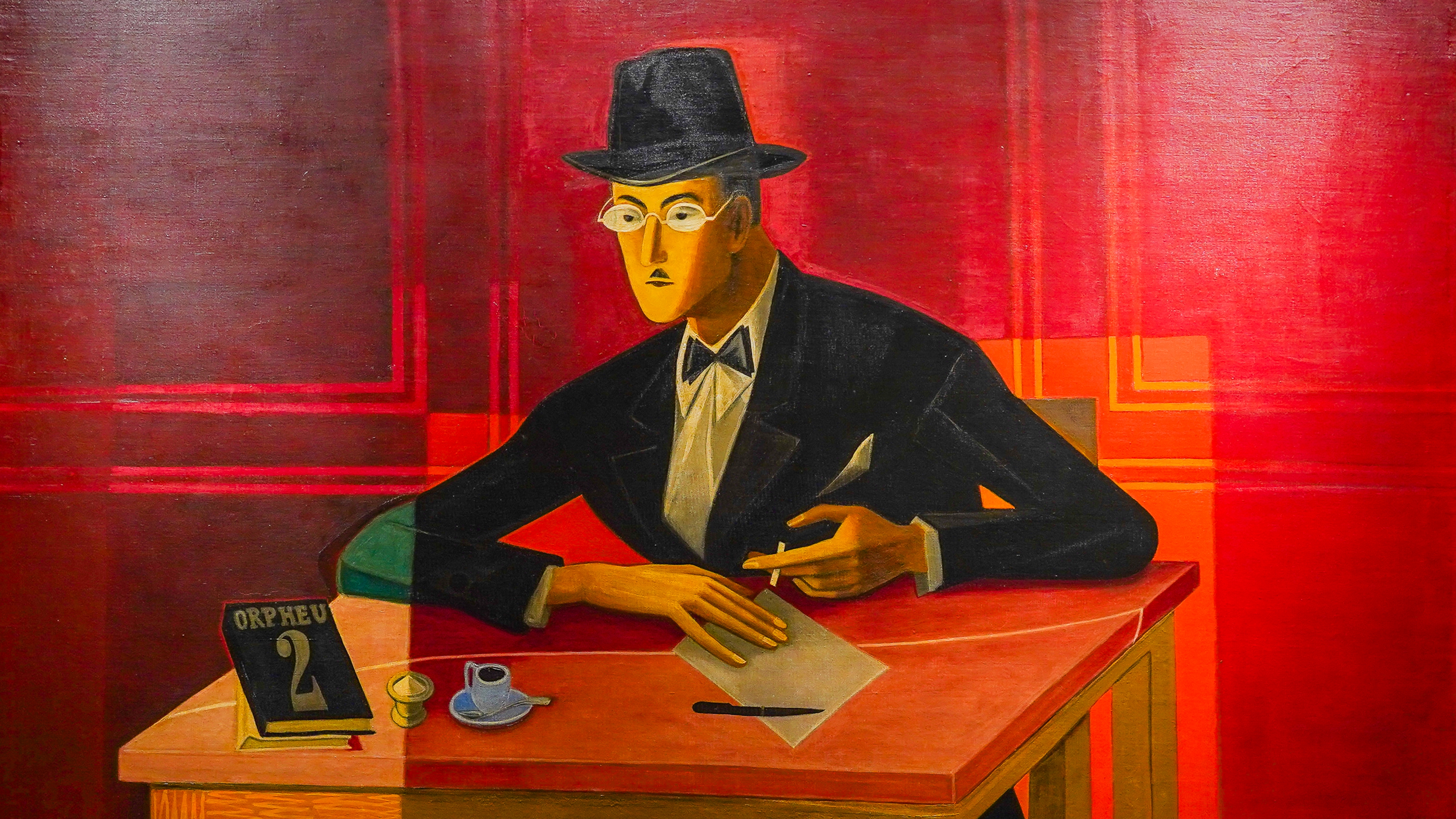
Fernando Pessoa by Almada Negreiros — on the table, Orpheu 2. - ✳︎
-
1916
- March
He begins experiments in automatic or mediumistic writing, which results from communication between the dead and the living.
- September
He decides to drop the circumflex from his surname, which he had until then written «Pessôa», because it «harm[ed] the name cosmopolitanly», as he explains in a letter to his friend Armando Cortes-Rodrigues.
- March
-
1917
- 12 May
The definitive contents of Orpheu 3 are decided; it is almost entirely printed in July, but never published, for lack of funds.
- October
Publication of Álvaro de Campos’s Ultimatum in the only issue of the magazine Portugal Futurista, seized by the police in November.
- 12 May
-
1918
- July
Pessoa publishes, at his own expense, Antinous and 35 Sonnets. He sends copies to several British newspapers, which print favourable reviews, though with some reservations about his archaic English.
- July
1919—1925Affections, family and projects
-
1919
- ✳︎
Ricardo Reis, a monarchist according to his biography, goes into exile in Brazil.
- 7 October
His stepfather dies, in Pretoria.
- 8 October
He meets Ofélia Queiroz at the firm Félix, Valladas & Freitas, Lda., where he works as a translator of commercial letters. Ofélia, hired as a secretary, becomes the only girlfriend of Pessoa’s we know of.
- ✳︎
-
1920
- 1 March
Date of his first letter to Ofélia Queiroz.
- March
He rents, in his mother’s name, the flat at Rua Coelho da Rocha, 16, 1st floor right, now Casa Fernando Pessoa.
- 30 March
After the stepfather’s death, Pessoa’s mother and half-siblings disembark in Lisbon.
- April
The family settles at Rua Coelho da Rocha, 16, 1st floor right. Pessoa will live in this flat until his death.
- October
Pessoa founds the firm Olisipo. It operates chiefly as a book publisher and as an intermediary in mining deals. In these roles, Pessoa draws on his studies at the Commercial School in Durban and on previous experience in firms of the trade.
- 29 November
His relationship with Ofélia Queiroz ends.
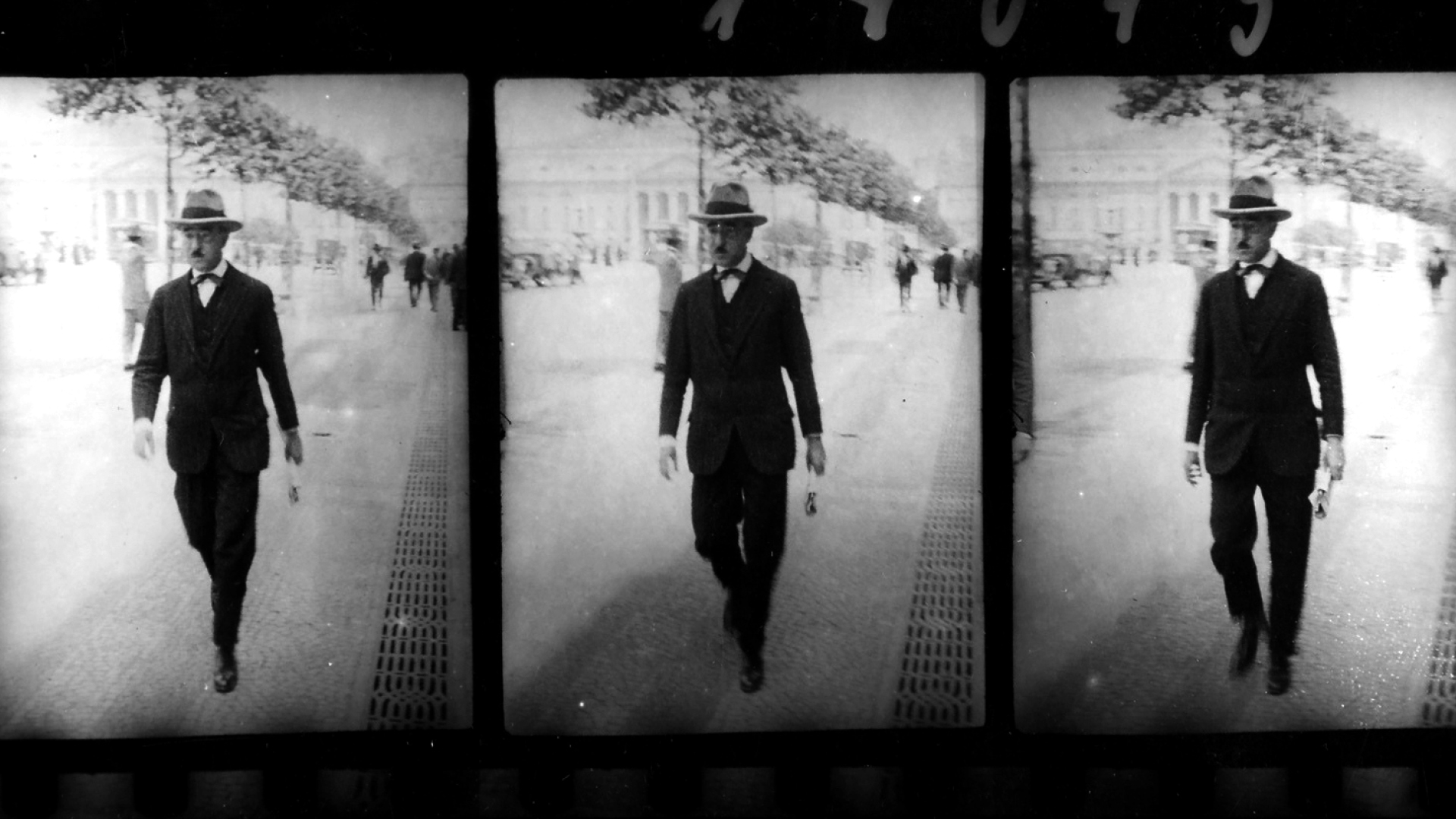
Pessoa walking in Lisbon — the decade in which he moves to Campo de Ourique. - 1 March
-
1921
- December
Pessoa publishes, through his firm Olisipo, his English Poems I-II and English Poems III. He also publishes A Invenção do Dia Claro by Almada Negreiros.
- December
-
1922
- May
He publishes O Banqueiro Anarquista in the first issue of Contemporânea, a literature and art magazine (Lisbon). In the same magazine he publishes, in October, «Mar Português» (a set of twelve poems, eleven of which will become part of Mensagem, the only book of poetry in Portuguese published in Pessoa’s lifetime).
- November
His firm Olisipo republishes Canções by António Botto, a poet controversial for being openly homosexual.
- May
-
1923
- February
Álvaro de Campos publishes «Lisbon Revisited (1923)» in Contemporânea.
His firm Olisipo publishes Sodoma Divinizada, a pamphlet by Raul Leal, an author who was part of the Orpheu group.
- March
The Civil Governor of Lisbon orders the seizure of several «immoral» books, among them António Botto’s Canções and Raul Leal’s Sodoma Divinizada. Pessoa reacts by circulating two manifestos in defence of the authors.
- February
-
1924
- October
Ricardo Reis makes his public debut with a set of twenty odes, in the first issue of Athena, an art magazine (Lisbon) edited by Pessoa and Rui Vaz, of which five issues will come out.
- December
He publishes, in the second issue of Athena, «Os Últimos Poemas de Mário de Sá-Carneiro» and «O que é a Metafísica», in which Álvaro de Campos disagrees with Fernando Pessoa.
- October
-
1925
- 8 February
Henrique Rosa dies — his stepfather’s brother, who had a close friendship with Pessoa and influenced him politically and in literature.
- 17 March
His mother dies.
- March
Alberto Caeiro makes his public debut, with 23 poems from O Guardador de Rebanhos, in the fourth issue of Athena.
- June
Sixteen compositions belonging to Alberto Caeiro’s Poemas Inconjuntos are published in the fifth issue of Athena.
- 27 October
He files a patent application for his invention of an «Anuário Comercial Sintético» (Synthetic Commercial Directory), a kind of yellow pages with coded information on the activities and contacts of European companies. The patent is granted.
- 8 February
1926—1935Maturity
-
1926
- June
Pessoa publishes Álvaro de Campos’s «Lisbon Revisited (1926)» in Contemporânea.
- June
-
1927
- 4 June
With an orthonymous poem — that is, signed with his own name — and the text «Ambiente», signed by Álvaro de Campos, Pessoa begins his intense collaboration with Presença, an art and criticism magazine (Coimbra).
- 18 July
He publishes three odes by Ricardo Reis in Presença.
- 4 June
-
1928
- ✳︎ August
The first passages attributed to Barão de Teive — probably the last fictional author created by Pessoa — appear in a notebook.
- ✳︎ August
-
1929
- February
A passage from the Livro do Desassossego (Book of Disquiet) comes out in A Revista (Lisbon). Ten more will be published by 1932. Pessoa had not published under this title since 1913. All the passages are attributed to Bernardo Soares.
- May–August
Three instalments of an Antologia de Poemas Portugueses Modernos, compiled by Pessoa and António Botto, are published by Solução Editora.
- September
Pessoa and Ofélia Queiroz resume their relationship.
- ✳︎ 25 September
Letter from Álvaro de Campos to Ofélia Queiroz.
- ✳︎ 26 September
Letter from Ofélia Queiroz to Álvaro de Campos.
- February
-
1930
- 11 January
He writes his last letter to Ofélia Queiroz. Ofélia dies in 1991.
- 13 June
He writes «Aniversário», published in the magazine Presença as having been written by Álvaro de Campos on his last birthday: 15 October 1929.
- 23 July
He writes the last two dated poems of Alberto Caeiro.
- 2 September
Aleister Crowley, the English magician and occultist with whom Pessoa had been corresponding since 1929, arrives in Lisbon.
- 23 September
Crowley stages his own suicide at the Boca do Inferno, near Cascais, after a quarrel with his girlfriend, Hanni Jaeger. Pessoa and Augusto Ferreira Gomes (journalist, poet and writer, a great friend of Pessoa) collaborate in the hoax.
- 5 October
The Notícias Ilustrado publishes a forged interview, by Augusto Ferreira Gomes with Fernando Pessoa, about the Crowley affair.
- 11 January
-
1931
- February
He publishes in Presença the eighth poem of O Guardador de Rebanhos and some of Álvaro de Campos’s Notas para a Recordação do meu Mestre Caeiro.
- February
-
1932
- 16 September
Pessoa applies for the post of curator-librarian of the Museu-Biblioteca Conde de Castro Guimarães, in Cascais, but is not selected.
- November
He publishes «Autopsicografia» in the magazine Presença.
- 16 September
-
1933
- January
Pierre Hourcade, a French scholar of Portuguese literature living in Portugal, publishes five poems by Pessoa — for the first time in France — in the magazine Les Cahiers du Sud (Marseille), with his own introduction and translations.
- July
He publishes Álvaro de Campos’s poem «Tabacaria» in Presença.
- January
-
1934
- May
Pessoa publishes the poem «Eros e Psique», his last contribution to the magazine Presença.
- 1 December
Mensagem comes out — the only book in Portuguese published by Pessoa. It goes on to win the Antero de Quental Poetry Prize (second category, for texts under 100 pages), created by the Secretariado de Propaganda Nacional.
- May
-
1935
- 13 January
He writes to Adolfo Casais Monteiro, one of the editors of the magazine Presença, a letter explaining the genesis of the heteronyms — a text of great importance for the understanding of heteronymy.
- 21 October
He writes «Todas as cartas de amor são / Ridículas», the last dated poem of Álvaro de Campos.
- 13 November
He writes «Vivem em nós inúmeros», the last dated poem of Ricardo Reis.
- 19 November
He writes «Há doenças piores que as doenças», his last dated poem in Portuguese.
- 22 November
He writes «The happy sun is shining», his last dated poem in English.
- 29 November
He is admitted, with severe abdominal pain, to the Hospital de S. Luís dos Franceses, in Lisbon. He writes his last words: «I know not what tomorrow will bring».
- 30 November
He dies, at around 8 p.m.
- 2 December
He is buried in the Prazeres cemetery, in Lisbon, where Luiz de Montalvor (poet, essayist and critic) delivers a brief speech in the name of the survivors of the group of the magazine Orpheu, of which he had been the first editor.
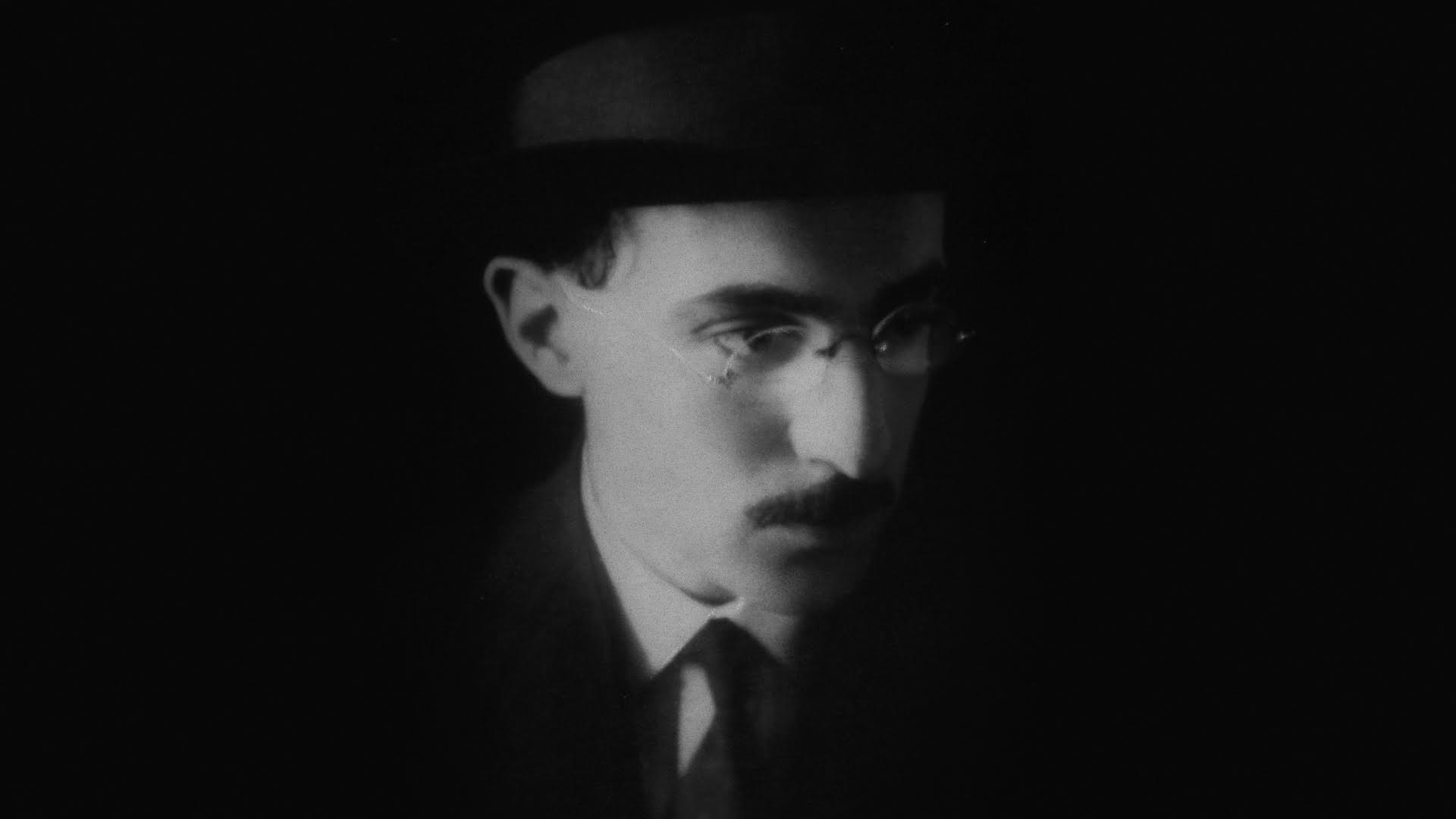
Fernando Pessoa dies on 30 November 1935, aged 47. - 13 January
1936—2009After Pessoa
-
1936
The magazine Presença publishes an issue entirely devoted to Fernando Pessoa.
-
1942
Editorial Confluência publishes an anthology of Pessoa’s poetry, compiled by Adolfo Casais Monteiro, gathering more than a hundred poems published in his lifetime.
-
1942–46
Pessoa’s poetry is published in five volumes by the Ática publishing house, edited by João Gaspar Simões (critic, essayist and editor of the magazine Presença) and Luiz de Montalvor. Many unpublished poems are included, drawn from the documents found in the trunk where Pessoa kept his writings.
-
1949
The first major study of Pessoa’s work is published: Diversidade e unidade em Fernando Pessoa, by Jacinto do Prado Coelho (Editorial Verbo).
-
1950
The first biography of Pessoa is published: Vida e Obra de Fernando Pessoa, written by João Gaspar Simões (Bertrand).
-
1973
Eduardo Lourenço (professor, essayist and critic) publishes the book Pessoa Revisitado (Editorial Inova).
-
1979
The Portuguese State acquires Pessoa’s estate from his half-sister, Henriqueta Madalena Nogueira Rosa Dias; it is transferred to the National Library of Portugal.
-
1982
First edition of the Livro do Desassossego (Book of Disquiet), organised by Jacinto do Prado Coelho, Maria Aliete Galhoz and Teresa Sobral Cunha, published by Ática.
-
1985
Pessoa’s remains are transferred to the Jerónimos Monastery, on the fiftieth anniversary of his death, in a state ceremony.
-
1988
Colloquia, exhibitions and new editions mark the centenary of his birth. Pessoa is by now widely read, translated and studied throughout the world.
The Lisbon City Council buys from Pessoa’s family a set of personal objects, about 1,200 books from his library and two pieces of furniture — the collection of Casa Fernando Pessoa at the time of its opening.
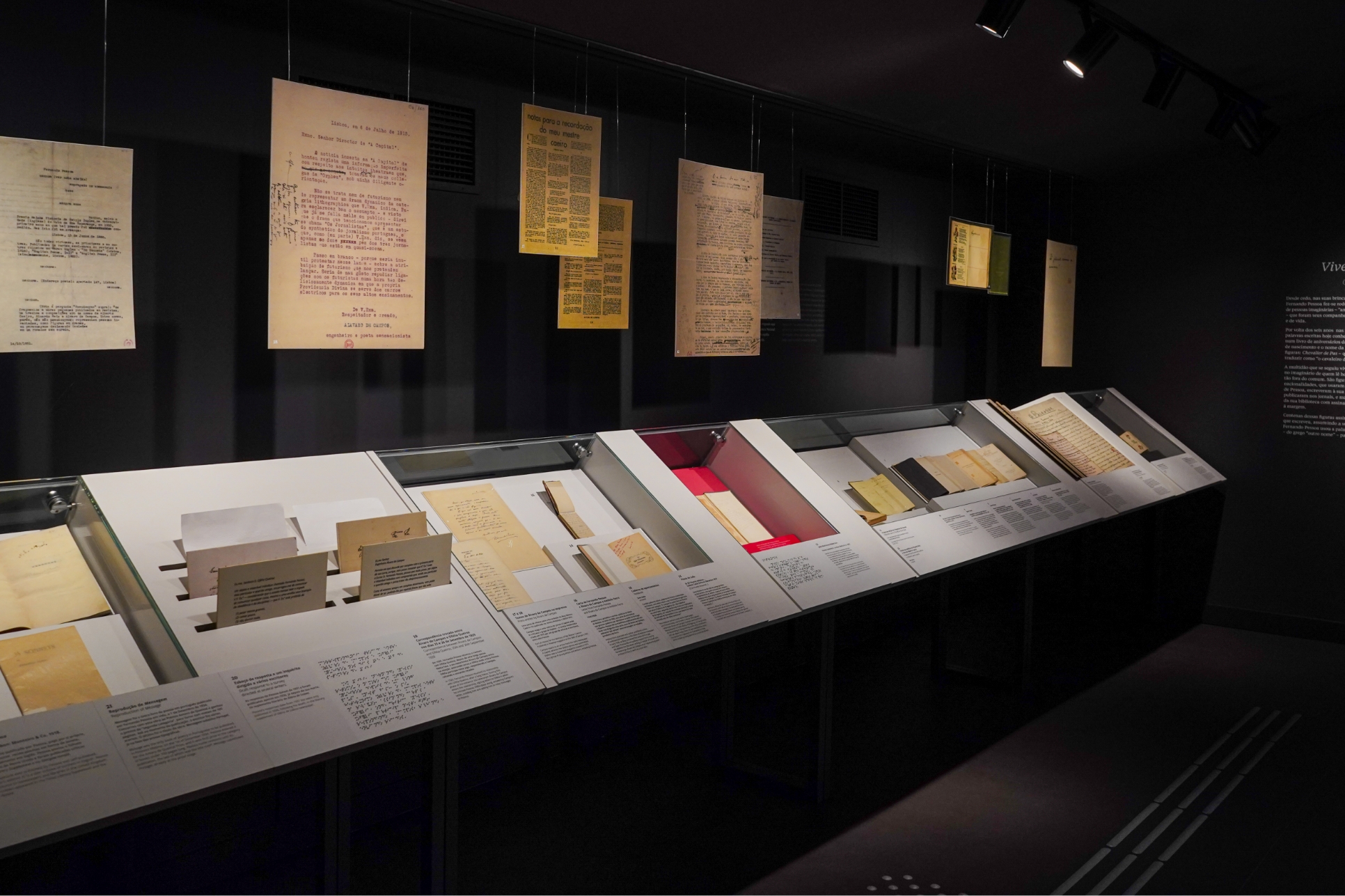
Manuscripts from the estate of Fernando Pessoa. -
1993
- 30 November
Opening of Casa Fernando Pessoa.
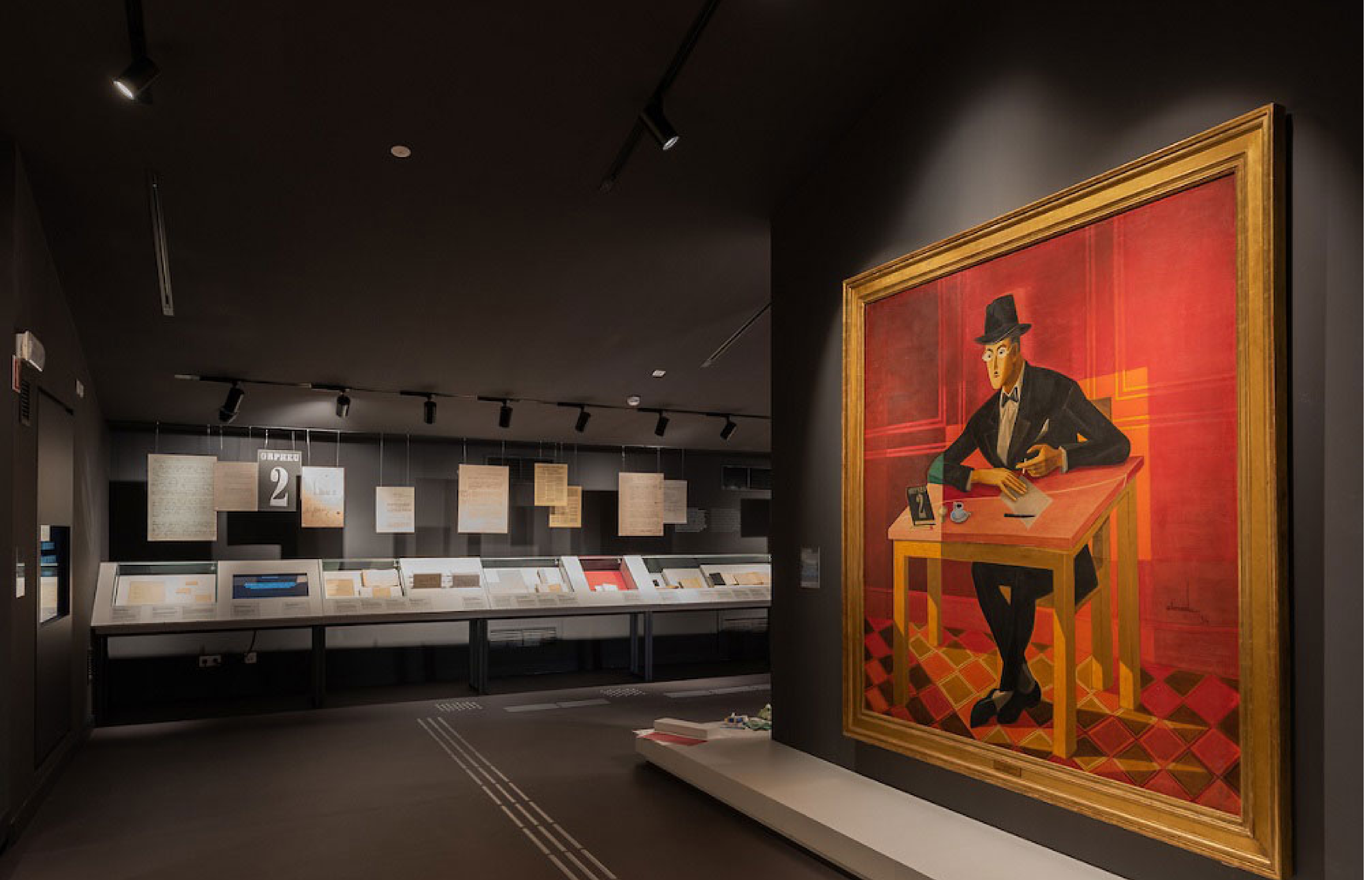
Casa Fernando Pessoa opens to the public on the day marking 58 years since the poet's death. - 30 November
-
2009
- September
The documentary estate of Fernando Pessoa is classified as an asset of national interest and designated a «national treasure».
- September
Chronology adapted from the one published in Fernando Pessoa, Escritos Autobiográficos, Automáticos e de Reflexão Pessoal (Assírio & Alvim, 2003), later revised by its author, Richard Zenith.